Tips for Creating a Relaxing Home Office Environment

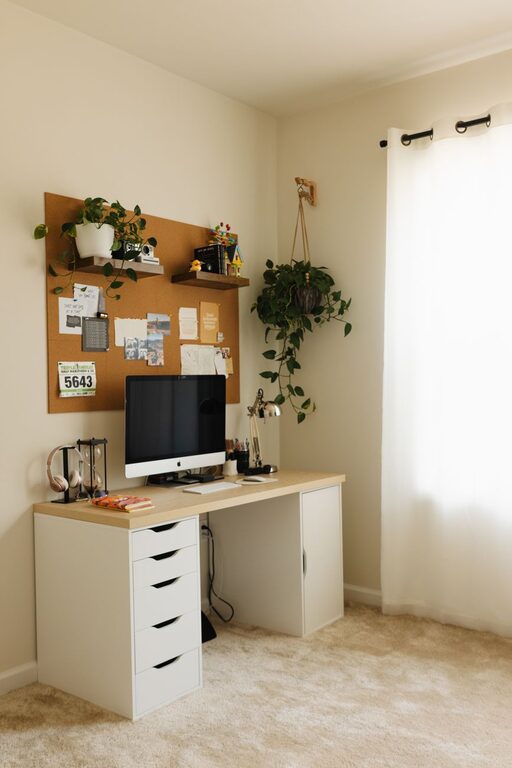
Creating a relaxing home office environment is essential for anyone looking to stay productive while maintaining a sense of calm throughout the workday. Whether you work remotely full-time or just occasionally, your workspace can have a big impact on how you feel and perform. In this post, we’ll explore practical tips that help transform your home office into a serene and inviting place.
Why a Relaxing Home Office Matters
Working from home comes with many benefits, but it can also blur the line between work and personal life. A cluttered or uncomfortable workspace can increase stress and reduce your motivation. On the other hand, a well-thought-out environment supports focus, creativity, and overall well-being.
Choose the Right Location
Consider Natural Light
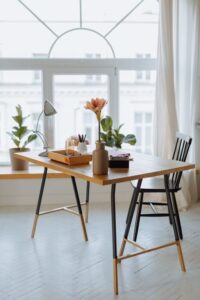
Placing your desk near a window allows you to take advantage of natural light, which is known to improve mood and energy. If natural light is limited, opt for a daylight-mimicking lamp to brighten your workspace.
Minimize Noise Distractions
Select a quiet spot in your home where you’re least likely to be interrupted. If noise is unavoidable, consider noise-canceling headphones or a white noise machine to help maintain concentration.
Invest in Comfortable, Ergonomic Furniture
Select an Ergonomic Chair
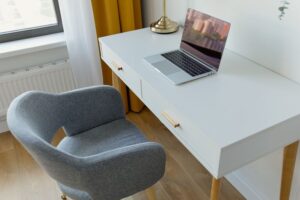
Sitting for long periods can strain your back and neck. Choose a chair that supports your posture with adjustable height, lumbar support, and cushioning.
Position Your Desk Properly
Ensure your desk height allows your elbows to rest comfortably at a 90-degree angle when typing. Arrange your keyboard and mouse to prevent wrist strain.
Personalize Your Space
Add Greenery
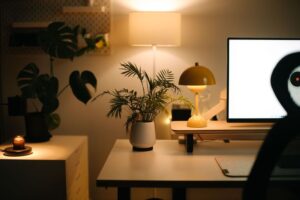
Indoor plants bring a touch of nature indoors and can improve air quality. Easy-to-care-for plants like succulents or spider plants are great for beginners.
Use Calming Colors
Soft, neutral colors such as light blues, greens, or beige can create a soothing atmosphere. Consider painting a wall or adding accessories in these shades.
Organize for Efficiency
Declutter Regularly
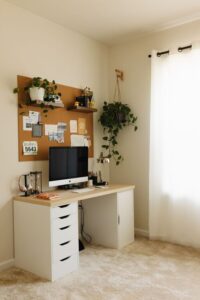
Keep your workspace tidy by removing unnecessary items. Use drawers, shelves, or organizers to keep supplies neatly stored but within reach.
Manage Cables and Electronics
Untangle cords and secure them with clips or sleeves. Organizing cables prevents distractions and hazards.
Incorporate Elements That Promote Relaxation
Use Aromatherapy
Scent can strongly influence mood. Consider a diffuser with calming essential oils like lavender or eucalyptus to create a serene environment.
Include Personal Touches
Photos, artwork, or meaningful items can make your space feel inviting and help reduce stress during busy days.
Establish Healthy Habits
Take Breaks
Schedule short breaks throughout the day to stretch, rest your eyes, or take a quick walk. This reduces fatigue and refreshes your mind.
Maintain a Consistent Routine
Set regular working hours and create clear boundaries between work time and personal time to help balance productivity and relaxation.
Optimize Technology Use
Reduce Screen Glare
Position screens to avoid glare from windows or lights. Adjust brightness and contrast settings for comfort.
Use Productivity Tools
Applications for task management and time tracking can help you stay organized without overwhelming your workspace.
—
Creating a relaxing home office requires a combination of thoughtful design, organization, and healthy habits. By applying these tips, you can build a workspace that helps you feel calm and focused — making your workday more enjoyable and productive. Remember, a peaceful environment is a cornerstone of professional success, even when working from home.