Tips for Creating a Cozy and Organized Home Office Space

Creating a home office space that feels cozy and organized can significantly improve your productivity and overall enjoyment while working from home. Whether you have a dedicated room or just a small corner, there are plenty of ways to make your workspace both inviting and efficient. In this post, we’ll explore practical tips to help you design a home office space tailored to your needs.
Why a Cozy and Organized Home Office Matters
Working from a cluttered or uncomfortable space can lead to distractions, fatigue, and decreased motivation. On the other hand, a well-organized office that feels cozy can help keep you focused, reduce stress, and boost your creativity. When setting up your home office, consider both the physical layout and the atmosphere you want to create.
Choosing the Right Location
Find a Quiet Spot
Select a location with minimal distractions, away from high-traffic areas. This will help you maintain concentration throughout the day.
Make Use of Natural Light
If possible, set up your desk near a window. Natural light improves mood and reduces eye strain. Keep blinds or curtains handy to control glare.
Consider Your Commute Within the Home
If you share your living space, choosing a spot that allows you a clear boundary between work life and personal life can enhance your mental well-being.
Selecting Functional and Comfortable Furniture
Invest in an Ergonomic Chair
Comfort is key for long working hours. Choose a chair that supports your lower back and encourages good posture.
Choose a Desk That Fits Your Needs
Measure your space before buying a desk. It should be large enough to hold your computer, paperwork, and any tools you use regularly.
Add Storage Solutions
Desks with built-in drawers or nearby shelves help keep important items within reach while maintaining a tidy environment.
Organizing Your Workspace for Efficiency
Declutter Regularly
Keep only essential items on your desk. Store away non-urgent paperwork and supplies to minimize distractions.
Use Containers and Organizers
Drawer dividers, pen holders, and file organizers keep small items in order. Label containers to find things quickly.
Implement Cable Management
Use clips, sleeves, or under-desk trays to keep cords organized and out of sight.
Adding Cozy Elements to Your Office
Choose Soothing Colors
Soft, neutral colors or pastels create a calming effect. Avoid overly bright or harsh tones that may cause visual fatigue.
Incorporate Textiles
A comfortable rug, soft throw, or cushions add warmth and texture, making your office feel more inviting.
Bring in Greenery
Plants not only beautify your space but also help purify the air and reduce stress.
Personalize with Art and Photos
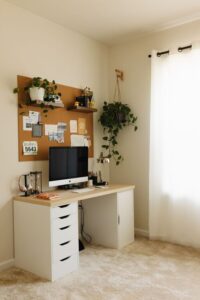
Display inspiring images or personal mementos to create a welcoming environment without overcrowding the space.
Lighting Tips for Comfort and Productivity
Use Layered Lighting
Combine overhead lighting with task lamps to avoid shadows and eye strain.
Choose Adjustable Lighting
A desk lamp with adjustable brightness helps you customize lighting depending on the time of day and the tasks you are doing.
Creating Boundaries for Work-Life Balance
Define Your Work Hours
Set specific start and end times to signal when work begins and ends.
Use a Room Divider or Curtains
If your office shares space with living areas, physical dividers can create a psychological separation.
Tidy Up at Day’s End
Closing your laptop and clearing your workspace can help transition you out of work mode.
Maintaining Your Cozy and Organized Office
Weekly Clean-Up
Set aside time to dust surfaces, empty trash, and organize papers.
Reassess Your Layout Periodically
Make adjustments to furniture arrangement or storage as your needs change.
Stay Mindful of Clutter
Develop a habit of putting things back in their place immediately after use.
Final Thoughts
Designing a cozy and organized home office is about balancing comfort and functionality. By paying attention to lighting, furniture, organization, and personal touches, you can create a space that supports your productivity and well-being. Whether you’re working full-time from home or occasionally handling tasks remotely, these tips will help you build an environment where you can thrive.